
 Frank van Esch
Most AI projects that stall begin at the model. "We want to do something with AI" is a fine feeling, but a poor starting point. It says nothing about where the gain is supposed to be. We prefer to begin a step earlier, at the work process: where is time being lost, and would a model genuinely help there.
That sounds like a detour, but it's the shortest route to something that keeps working. A model that removes a real bottleneck pays for itself. A model that was stuck on top of something because it happened to be possible stops getting switched on after two weeks.
Start at the work process
The first question isn't "which model", but "which step hurts". Walk through the process and find the place where someone keeps doing the same judgement work. That's where a model can prepare something, without taking the decision away.
An example. In an inspection process, someone read every report to attach a first judgement to it. Day in, day out, including the reports where little was going on. A model can prepare that judgement well enough: it gives each report a score, lets the clear cases pass, and flags the doubtful ones for a human.
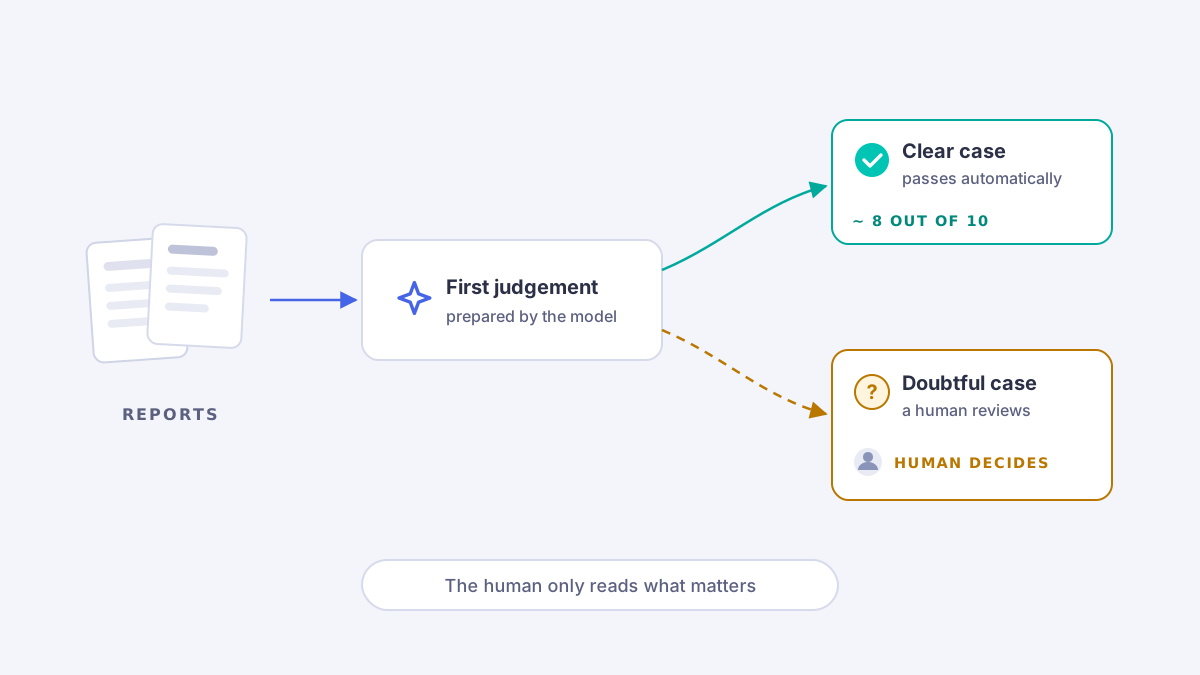
The gain is in something other than the model itself: the person now only reads what matters. The same number of people, the same quality, but the attention goes to the cases where attention makes a difference.
The human stays at the controls
Accelerating must never mean the control disappears where a mistake is expensive. That's where the craft sits: take the human out where it's safe and boring, and keep them in where the judgement counts.
The nice part is that this builds trust too. A team that sees the doubtful cases land neatly with them dares to let the model do the rest. A model that takes everything over in one go never earns that trust, and gets switched off again at the first mistake.
The mistakes we walk into ourselves
We say this with some embarrassment, because we run into them too. Three recurring ones.
- Reaching for generative too early, when a simple classification would have done. A language model that writes a text is more impressive than one that only says "yes" or "no", but for the work that second one is often exactly what's needed.
- Not building human-in-the-loop where a mistake is expensive. Then the demo is beautiful and the first real miss is an instant breach of trust.
- Starting before the sources are in order. A model on messy data gives you tidy mess back, and that's treacherous, because it looks convincing.
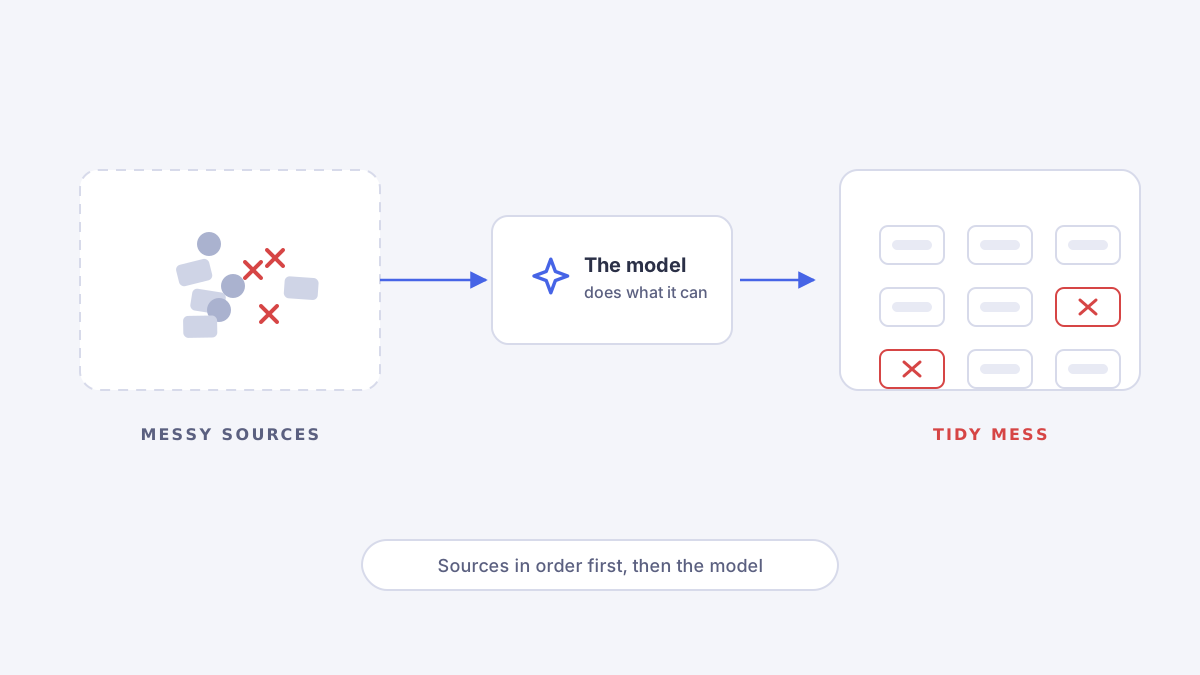
That last one is the quiet killer. The energy goes to the model, while the gain often sits in the data underneath it. A boring clean-up pass returns more than a smarter model on a shaky base.
Accelerating isn't a goal
AI is good at accelerating. It takes the repetitive work away and gives people back their attention for the things that deserve it. But it isn't a goal in itself, and rarely a silver bullet.
The question remains what the process underneath it is, and whether that process is worth speeding up. If the answer is yes, AI is a fine engine. If the answer is no, no model fixes that. You've then built a fast-running process nobody needed.